
I was making my way out of a computer science exam, and through the campus gates, when I stopped. There, on the very bricks of the archway marking the university’s entrance, and on the ground below, were engraved a few slogans in pastel rainbow chalk. Phrases such as “free Palestine”, or “Zionism is a crime”, stared right back at me. Enter a car, of which two men climb out in a fury, one of whom holds a water hose. They make their way around each of the slogans, as the sun sets, lit by only a feeble amount of light. As they do, they drown “from the river to the sea”, and hold “free Palestine” at gunpoint. The water screeches and scratches at the words. When they leave, as suddenly as they had come, nothing in their wake remains but dripping colors, tainting the floor in faint hues. Only then did I come to the realization that, all throughout their endeavour, I hadn’t been able to turn away – I had instead been staring, disgusted, but also shocked. While I would never have expected that these words would be allowed to remain imprinted here, the whole ordeal struck me in its symbolic brutality.
And so, I made my way to the cinema.
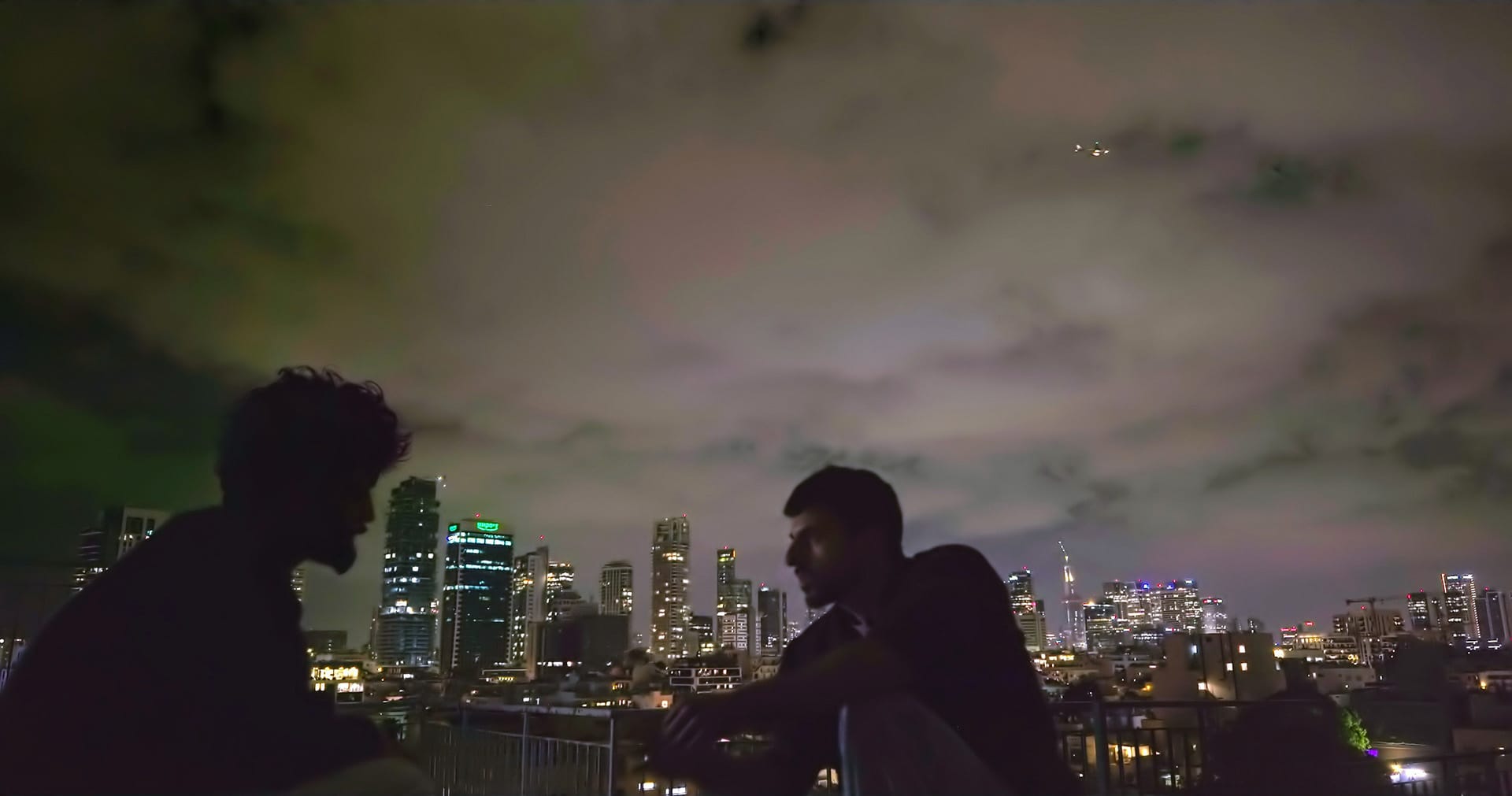
In recent days, Naza has been nothing short of the talk of the moment – and, if you hadn’t heard about it yet, trust me when I say that you will. While, as of now, it has yet to reach the public eye – as it will be made accessible for free in November – it has nonetheless already garnered attention at the Venice Film Festival earlier this year, where it earned the Special Jury Award. Shot through the course of two years (from 2023 to 2025), this documentary shows as Yuval Abraham and Rachel Szor – the two journalists for the Israeli media outlet +972 – interview 24 Israeli soldiers and intelligence officers on Tel Aviv’s rooftops. But, of course, it’s not that simple: the interviewees only agreed to appear on camera as long as their anonymity was guaranteed – as they feared backlash from the government. A fear which is not solely rooted in paranoia, as the film’s posteriority has shown; both of its directors having faced not only death threats by Zionist protestors, but also threats from the government itself. Netanyahu has indeed, since the film’s screening at the Venice Festival, repeated his intent to strip them of their citizenship. Therefore, Naza’s filmmakers had to find a way around the paradox of filmed anonymity; which they achieved by shooting their subjects as silhouettes.
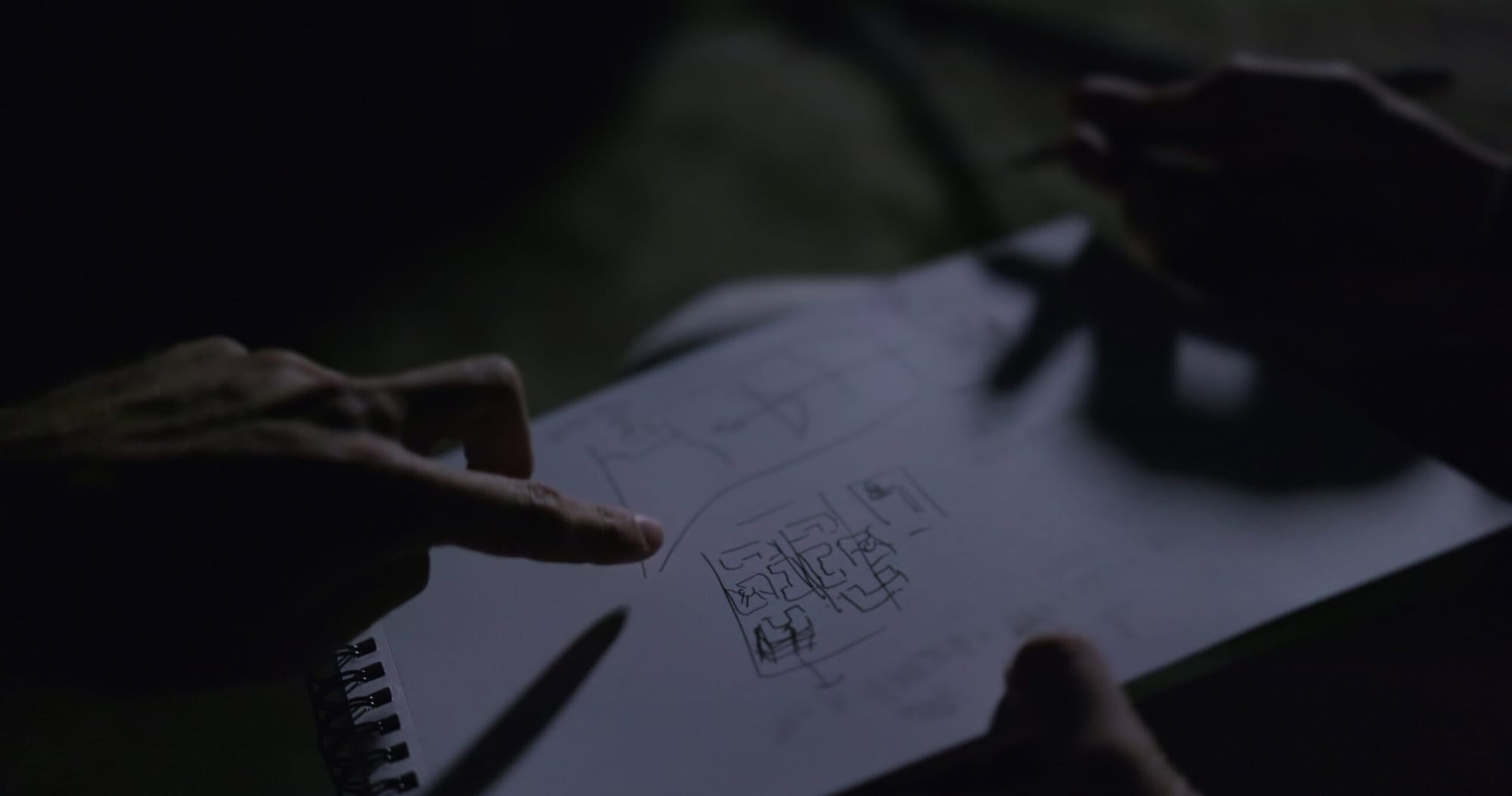
You may now wonder: ‘what does naza even refer to?’ The documentary sheds light on a variety of IDF ‘slang’ for processes in their operations, of which ‘naza’ is the first to be explained. Whenever an officer acquires the intel that a Hamas operative is within said location, they are also made aware of other people near the target. Naza refers to these people; the collateral damage. Acceptable victims to kill the target. Later on, when asked what the highest naza they’ve witnessed is, an Israeli officer says ‘500’. That means that, for one single target, five hundred human lives were an ‘acceptable’ price to pay.
When listening to the interviewees, a few things strike as surprising. First of all, it’s how detached they seem from the matter at hand. Although they’ve had their part in the killing of hundreds to thousands of people, they describe it very calmly. More shocking than that – and altogether paradoxal – is how self-aware they are. Some, more than others, directly admit to the atrocities they’ve done, and refer to them as nothing less than what they are. A particularly relevant case, is the instance when one says that he once had visited Poland, and, while examining the Holocaust, thought: ‘How can anyone do such a thing?’ Yet now, looking back at it, he wonders, if nazis were monsters, what are we?
Another important part of their conversation is the room AI takes in the military process. While I often stopped to criticize AI over creative issues, it's true that I hadn't heard about much of its use in warfare – except for the Anthropic issue. It's interesting – to not say scary – to see the extent to which AI is becoming an important cog in the war machine. As used by Israelis, it seemed as an intermediary tool to both dishumanise victims – which are nothing more but naza numbers calculated by machines – and render abstract and mechanical the mass murder of civilians.
If many things are to be said about Naza's contents, one also has to commend its form. Throughout the film, the various speeches from the different interlocutors are masterfully juxtaposed to the backdrop of Tel Aviv. When they talk about tracking Palestinians’ sleep habits to launch airstrikes in their slumber, a cut ensues and the camera pans away to windows of neighbouring buildings, where people seem to be resting. When they talk about the Israeli control of the west bank’s food, we are shown windows leading to kitchens, to tables where consumable goods lay idle. We, spectators, are made to re-enact the constant surveillance looming over Palestinians, only now, our eyes rest on Tel Aviv – the watchers are being watched. This continued back and forth between the tales of violence on the Palestinian front and the peaceful life led by Israeli civilians draws a brutal contrast.
Overall, Naza is sure to be one of the most important documentaries of the year. While it only runs on eighty minutes of screen time, the truths it exposes echo longer than that. We'd urge everyone to go see it at their local cinemas – provided that they can – and, otherwise, to watch it as soon as it's out online! Whether you're well versed on the palestinian genocide or not, you're sure to learn a lot.